
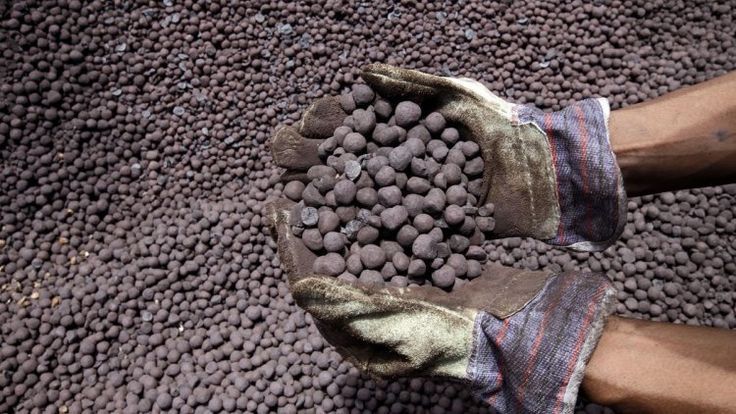
Bentonite in Iron Ore Pelletization: How It Improves Pellet Strength
Introduction
In iron ore pellet plants, achieving consistent pellet quality is not optional. Pellet strength directly impacts handling losses, furnace efficiency, and overall production cost. One key material plays a critical role in this process: bentonite.
Bentonite in iron ore pelletization acts as a binder that holds fine iron ore particles together, improving pellet strength during formation, drying, and firing. Despite being used in small percentages, its impact on pellet performance is significant.
This article explains how bentonite improves pellet strength, the science behind its binding action, key quality parameters, and why pellet plants worldwide rely on high-grade bentonite.
What Is Bentonite and Why Is It Used in Pelletization?
Bentonite is a natural clay dominated by the mineral montmorillonite, known for its high swelling capacity and binding properties.
In pelletization, bentonite is added to iron ore fines to:
- Bind particles during ball formation
- Improve green pellet handling strength
- Reduce breakage during drying and firing
Typical dosage ranges between 0.5% to 0.7% by weight, depending on ore characteristics and bentonite quality.
How Bentonite Improves Pellet Strength
1. Improves Green Pellet Strength
Green pellets are freshly formed pellets before drying. At this stage, strength is critical for conveying and screening.
Bentonite improves green strength by:
- Absorbing water and swelling
- Creating a gel-like network around iron ore particles
- Increasing capillary bonding forces
This results in:
- Higher drop number
- Lower fines generation
- Better pellet size uniformity
2. Enhances Dry Pellet Strength
During drying, moisture removal can weaken pellets if binding is insufficient.
Pelletizing bentonite:
- Maintains particle cohesion as water evaporates
- Reduces crack formation
- Improves resistance to abrasion
Dry pellet compressive strength typically improves by 15–25% when high-quality bentonite is used.
3. Supports Fired Pellet Strength
In the induration furnace, pellets are exposed to high temperatures.
Bentonite contributes by:
- Forming stable bonding bridges
- Preventing pellet deformation
- Supporting uniform heat transfer
This leads to:
- Higher cold crushing strength (CCS)
- Reduced pellet degradation during transport
- Improved blast furnace permeability
Key Bentonite Properties Required for Pellet Plants
Not all bentonite grades perform the same. Pellet plants focus on the following parameters:
Essential Technical Parameters
- Swelling Index: ≥ 27 ml / 2 g
- Montmorillonite Content: High and consistent
- Moisture Content: ≤ 12%
- pH (5% slurry): 8.5 to 10
- Residue on 75 µm sieve: ≤ 4%
Higher swelling bentonite allows lower dosage, which helps control silica input into pellets.
Sodium Bentonite vs Calcium Bentonite in Pelletization
Sodium Bentonite (Preferred)
- Higher swelling capacity
- Better binding efficiency
- Lower consumption rate
- Widely used in iron ore pellet plants
Calcium Bentonite
- Lower swelling
- Requires higher dosage
- Often sodium-activated before use
For consistent pellet strength, sodium bentonite for pelletization is the industry standard.
Impact on Pellet Plant Economics
Using the right bentonite grade can:
- Reduce bentonite consumption by 10–20%
- Improve pellet yield
- Lower fines recycling cost
- Increase furnace productivity
Even a 0.05% reduction in binder dosage can result in significant annual cost savings for large pellet plants.
Common Mistakes Pellet Plants Should Avoid
- Selecting bentonite based only on price
- Ignoring swelling index and montmorillonite content
- Using inconsistent quality material
- Skipping regular lab testing and trials
Pellet plants should always evaluate bentonite through plant trials, not just lab data.
Why Elite Mining Bentonite Performs Better in Pelletization
At Elite Mining, our pelletizing bentonite is:
- Sourced from high-quality Kutch deposits
- Processed for consistent particle size
- Tested for swelling, moisture, and residue
- Supplied with complete TDS and batch traceability
We work closely with pellet plants to optimize dosage and performance.
Frequently Asked Questions (FAQs)
1. How much bentonite is used in iron ore pelletization?
Typically 0.5% to 0.7%, depending on ore characteristics and bentonite quality.
2. Does bentonite increase silica content in pellets?
Yes, but high-swelling bentonite allows lower dosage, minimizing silica addition.
3. Can bentonite be replaced with organic binders?
Organic binders exist, but bentonite remains the most reliable and cost-effective solution globally.
4. How do I select the right bentonite for my pellet plant?
Focus on swelling index, consistency, and plant trial performance rather than color or price.
Conclusion
Bentonite in iron ore pelletization is a small addition with a massive impact. By improving green, dry, and fired pellet strength, it ensures smooth plant operations and efficient furnace performance.
Choosing the right pelletizing bentonite is not just a procurement decision. It is a process optimization strategy.
Call To Action
If you are looking for reliable pelletizing bentonite with consistent performance, technical support, and export-ready supply:
📧 Email: info@elitemining.in
🌐 Website: www.elitemining.in
📦 Bulk supply | Custom grades | Domestic & export markets